

Govardhan Puja 2026: Date, History, Story of Lord Krishna, Significance & Annakut Celebration
Discover the divine story of Lord Krishna lifting Govardhan Hill, the meaning of Annakut, traditional rituals and the beautiful celebrations of Govardhan Puja.
🌺 Tuesday, November 10, 2026 🌺


Govardhan Puja, also known as Annakut or Annakoot, is an important Hindu festival dedicated to Lord Krishna and Govardhan Hill. It celebrates the divine story of Lord Krishna protecting the people of Braj from heavy rainfall by lifting Govardhan Hill on his little finger. The festival teaches gratitude, devotion, humility and respect for nature.
Every year, devotees celebrate Govardhan Puja with prayers, traditional food offerings, cow worship, devotional songs and beautiful decorations. Temples prepare Annakut, a grand collection of food dishes offered to Lord Krishna.
📅 Date: Tuesday, November 10, 2026
🙏 Main deity: Lord Krishna (Giriraj Govardhan)
🍚 Also known as: Annakut Puja
📖 Important story: Krishna lifting Govardhan Hill
🌿 Main message: Gratitude, devotion and respect for nature
⏰ Delhi morning muhurat: 6:40 AM – 8:50 AM
Timings are for New Delhi and may differ by location and Panchang.
📅 1. Govardhan Puja 2026 Date and Muhurat
Govardhan Puja in 2026 will be observed on Tuesday, November 10, according to the New Delhi Panchang. The festival falls on Kartik Shukla Pratipada, the first day of the bright fortnight of the Hindu month of Kartik.
In 2026, the main Diwali celebration falls on November 8, while Govardhan Puja is observed on November 10. The difference in dates is due to the lunar tithi and its timing at sunrise.
Festival date: Tuesday, November 10, 2026
Morning Puja Muhurat: 6:40 AM – 8:50 AM
Pratipada Tithi begins: November 9, approximately 12:31 PM
Pratipada Tithi ends: November 10, approximately 2:00 PM
Always confirm local timings with your family tradition or local Panchang.
📖 2. History of Govardhan Puja
Govardhan Puja has its roots in ancient Hindu traditions and the stories of Lord Krishna’s childhood in the Braj region. The festival is closely connected with the Govardhan Leela described in Hindu religious literature, especially the Bhagavata Purana.
According to the traditional story, the residents of Vrindavan depended on Govardhan Hill, nearby forests, water sources and their cattle for their daily lives.
Young Krishna encouraged the villagers to express gratitude to Govardhan Hill and nature, which supported their livelihoods. This teaching became an important part of the tradition remembered through Govardhan Puja.


🙏 3. The Story of Lord Krishna and Govardhan Hill
Why Did Lord Krishna Ask the Villagers to Worship Govardhan Hill?
According to Hindu tradition, the people of Vrindavan traditionally prepared offerings for Lord Indra, the deity associated with rain and storms. They believed that worshipping Indra would bring rainfall and support their farming and cattle.
Young Krishna asked the villagers to consider the natural gifts that directly supported their lives. Govardhan Hill provided grass for cattle, water, shelter and resources for the community.
Krishna encouraged the people to honour Govardhan Hill, the cows and the natural environment.
Why Did Lord Indra Become Angry?
When the villagers followed Krishna’s advice, Lord Indra became angry. According to the story, he sent heavy rain and powerful storms towards Vrindavan.
How Did Krishna Protect the People?
Seeing the villagers in danger, Lord Krishna lifted the enormous Govardhan Hill on the little finger of his left hand. He created shelter beneath the hill for the villagers, their families and their cattle.
According to the traditional account, Krishna continued holding the hill for seven days until the storm ended.


The Lesson of Govardhan Leela
Eventually, Lord Indra understood his mistake and recognised Krishna’s divine power. The story teaches that pride should be replaced by humility, and people should respect nature and appreciate the resources that support life.
🌿 4. Religious Significance of Govardhan Puja
Govardhan Puja carries several important spiritual and cultural messages.
Faith and Devotion
The festival celebrates devotion to Lord Krishna and faith in divine protection.
Respect for Nature
Govardhan Hill represents the importance of mountains, forests, water and natural resources.
Importance of Cows
The festival recognises the traditional importance of cattle in rural life and agriculture.
Gratitude for Food
Annakut symbolises appreciation for food and the blessings of nature.
Community Togetherness
People come together for prayers, food offerings and celebrations.
Humility
The story reminds people that pride should never overcome wisdom and kindness.
🍚 5. What Is Annakut and Chappan Bhog?
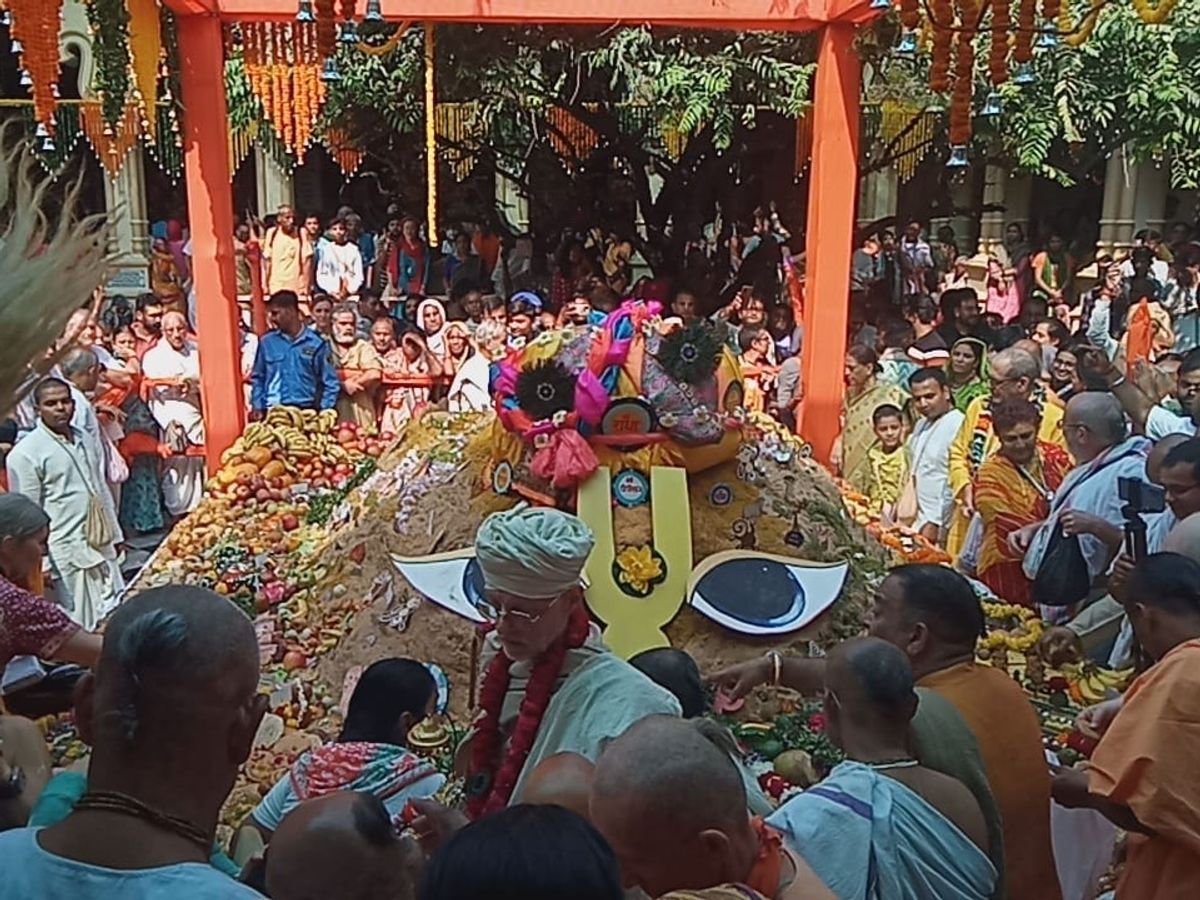
Annakut is one of the most important traditions of Govardhan Puja. The word Annakut means a mountain of food. Devotees prepare a large variety of dishes and arrange them as a symbolic mountain before Lord Krishna.
The food offerings represent gratitude for nature’s blessings and the importance of sharing food with others.


What Is Chappan Bhog?
Chappan Bhog means an offering of 56 different food preparations. It is a popular tradition in many Krishna temples and devotional communities.
The offerings may include sweets, fruits, grains, rice preparations, dairy dishes and traditional snacks.
🍬 Traditional Sweets
Laddoo, peda, barfi, kheer, halwa and other regional sweets.
🍛 Food Preparations
Puri, rice, dal, vegetable dishes and other traditional meals.
🍎 Fruits
Bananas, apples, oranges, grapes and seasonal fruits.
🥛 Dairy Offerings
Milk, curd, butter, makhan and other milk-based preparations.
After the religious offering, the food is distributed as Prasad among devotees and visitors.
🪔 6. Govardhan Puja Rituals and Traditions
Families and temples follow different traditions depending on their region and religious practices. Common observances include the following:
🌄 Morning Preparations
Families clean their homes and prepare the puja area. Flowers, lamps and traditional decorations may be arranged.
⛰️ Making Govardhan Hill
In some traditions, a small symbolic Govardhan Hill is made using cow dung or clay and decorated with flowers and other natural materials.
🙏 Worship of Lord Krishna
Devotees offer flowers, incense, lamps and prayers to Lord Krishna in his Govardhan-dhari form.
🍚 Preparing Annakut
Different dishes are prepared and offered to Lord Krishna as a symbol of gratitude and devotion.
🐄 Gau Puja
In communities where this custom is followed, cows are respectfully honoured and worshipped.
🎶 Aarti and Prasad
Devotees sing devotional songs, perform aarti and distribute Prasad among family members and visitors.

🚶 7. What Is Govardhan Parikrama?
Govardhan Parikrama is a traditional devotional journey around Govardhan Hill in the Mathura district of Uttar Pradesh. Devotees walk around the sacred hill as an expression of faith and devotion to Lord Krishna.
The commonly followed full parikrama route is approximately 21 kilometres long. It passes several religious sites, temples, kunds and places associated with Krishna’s life and Govardhan Leela.
Important Places Along the Parikrama
- Govardhan Hill
- Manasi Ganga
- Radha Kund
- Shyam Kund
- Danghati Temple
- Jatipura
Many devotees visit Govardhan throughout the year, while the Kartik month is especially significant for religious observances.
🎉 8. How Is Govardhan Puja Celebrated Across India?
🌺 Mathura and Vrindavan
Mathura and Vrindavan are among the most important destinations for Govardhan Puja. Temples organise special prayers, devotional programmes and Annakut offerings.
⛰️ Govardhan, Uttar Pradesh
Devotees visit the sacred Govardhan area to perform Parikrama and offer prayers at important religious places.
🏛️ Nathdwara, Rajasthan
Govardhan Puja and Annakut are important celebrations at Shrinathji Temple. Devotional offerings and temple decorations attract many devotees.
🌸 Gujarat
Many Gujarati communities celebrate Govardhan Puja with Annakut offerings. The day is also associated with the Gujarati New Year in many traditions.
🌍 Other Parts of India
Temples and communities across India organise Krishna worship, food offerings, cultural programmes and devotional gatherings.


💡 9. 12 Interesting Facts About Govardhan Puja
❓ 10. Frequently Asked Questions About Govardhan Puja
Q1. When is Govardhan Puja in 2026?
Govardhan Puja will be celebrated on Tuesday, November 10, 2026, according to the New Delhi Panchang.
Q2. Why is Govardhan Puja celebrated?
It commemorates Lord Krishna lifting Govardhan Hill to protect the people and cattle of Braj from heavy rainfall sent by Lord Indra.
Q3. What is another name for Govardhan Puja?
It is also called Annakut or Annakoot Puja.
Q4. What is Annakut?
Annakut means a mountain of food. Devotees prepare different dishes and offer them to Lord Krishna.
Q5. What is Chappan Bhog?
Chappan Bhog refers to an offering of 56 different food preparations to Lord Krishna.
Q6. Which god is worshipped during Govardhan Puja?
Lord Krishna is worshipped in his Govardhan-dhari form. Govardhan Hill is also honoured.
Q7. What is Govardhan Parikrama?
It is a devotional walk around Govardhan Hill in the Mathura district of Uttar Pradesh.
Q8. What is the main message of Govardhan Puja?
The festival teaches gratitude, humility, devotion, community spirit and respect for nature.
Q9. Where is Govardhan Hill located?
Govardhan Hill is located near Mathura in Uttar Pradesh, India.
Q10. What is the morning puja time in Delhi in 2026?
The listed morning muhurat is 6:40 AM to 8:50 AM on November 10, 2026. Local timings may vary.
🌺 Happy Govardhan Puja 2026 🌺
Govardhan Puja reminds us of the beautiful story of Lord Krishna, the importance of nature and the value of gratitude. The traditions of Annakut, Gau Puja, Parikrama and devotional prayers bring families and communities together.
May Lord Krishna bless everyone with happiness, peace, prosperity and wisdom.
🙏 Jai Shri Krishna! 🙏